
Bide (v)
Date: 13th March 2025Dimensions(m) 3.6, 0.7, 0.9
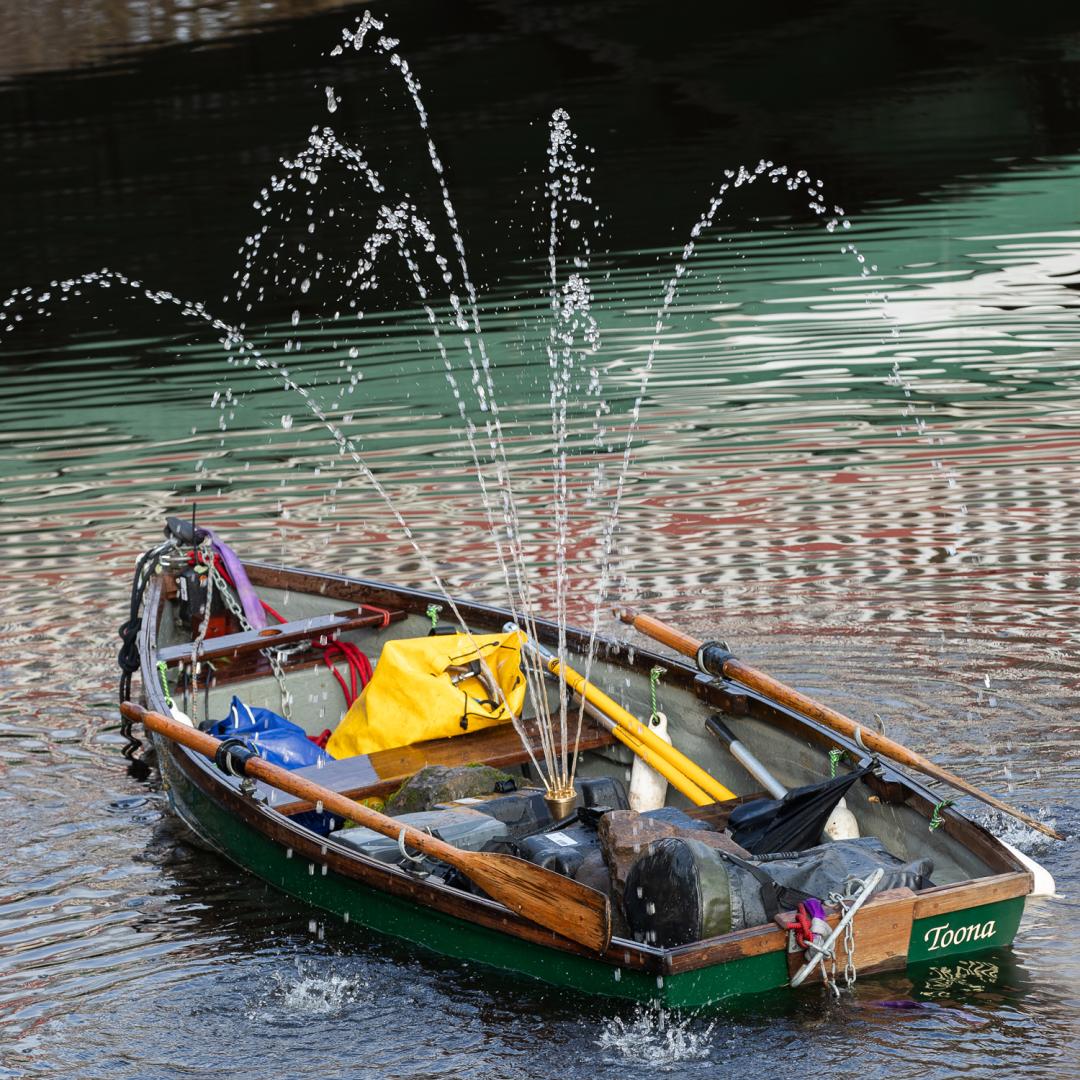
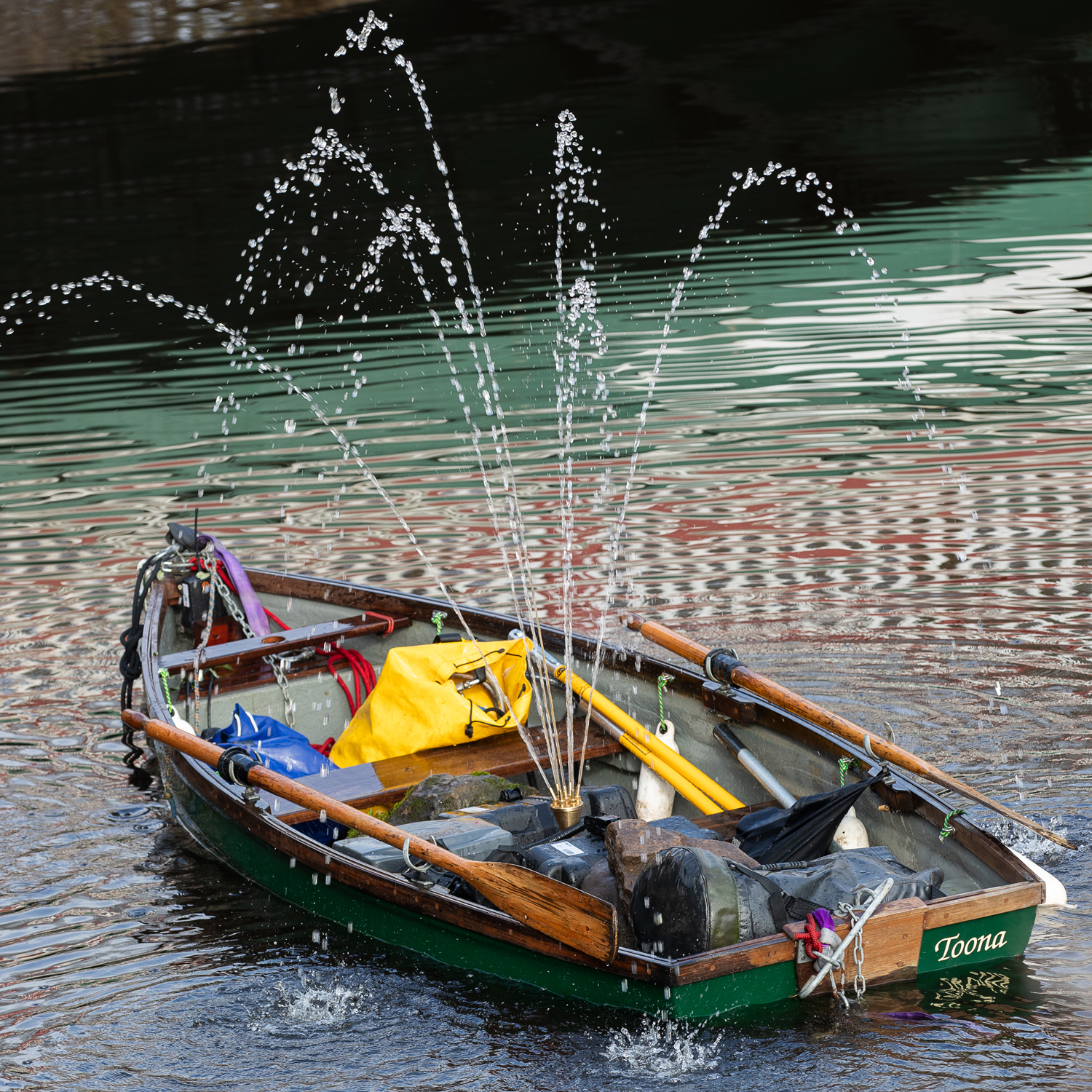
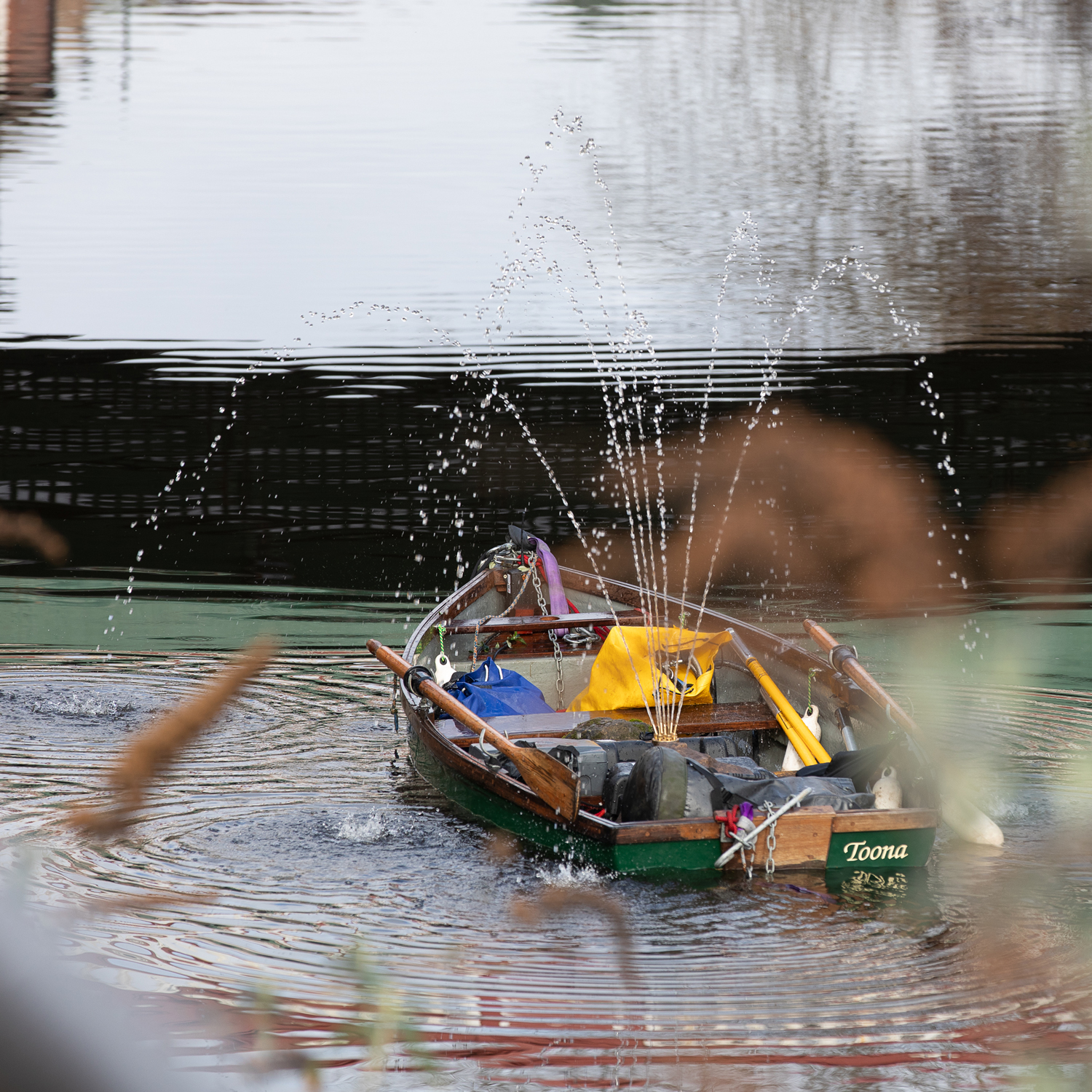
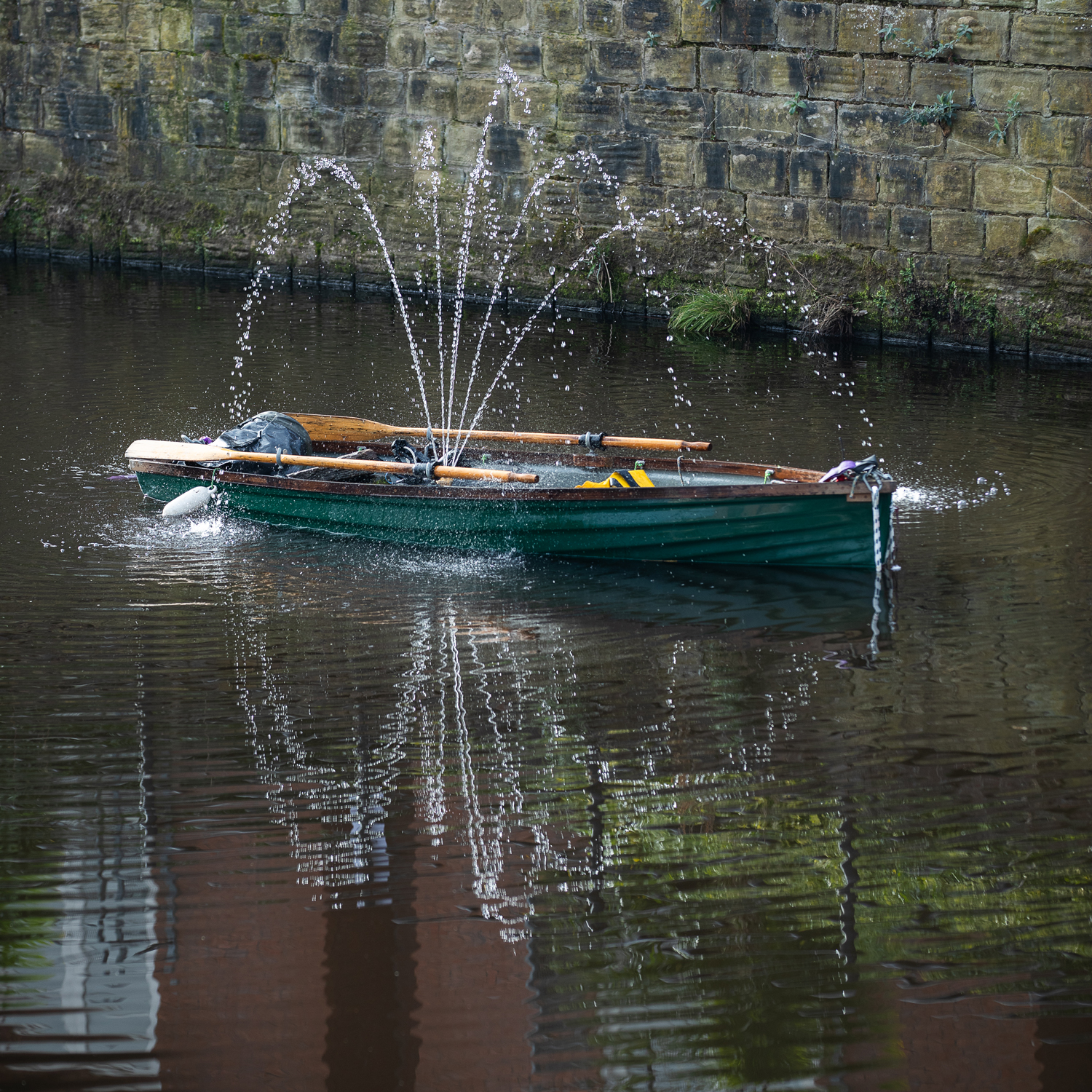
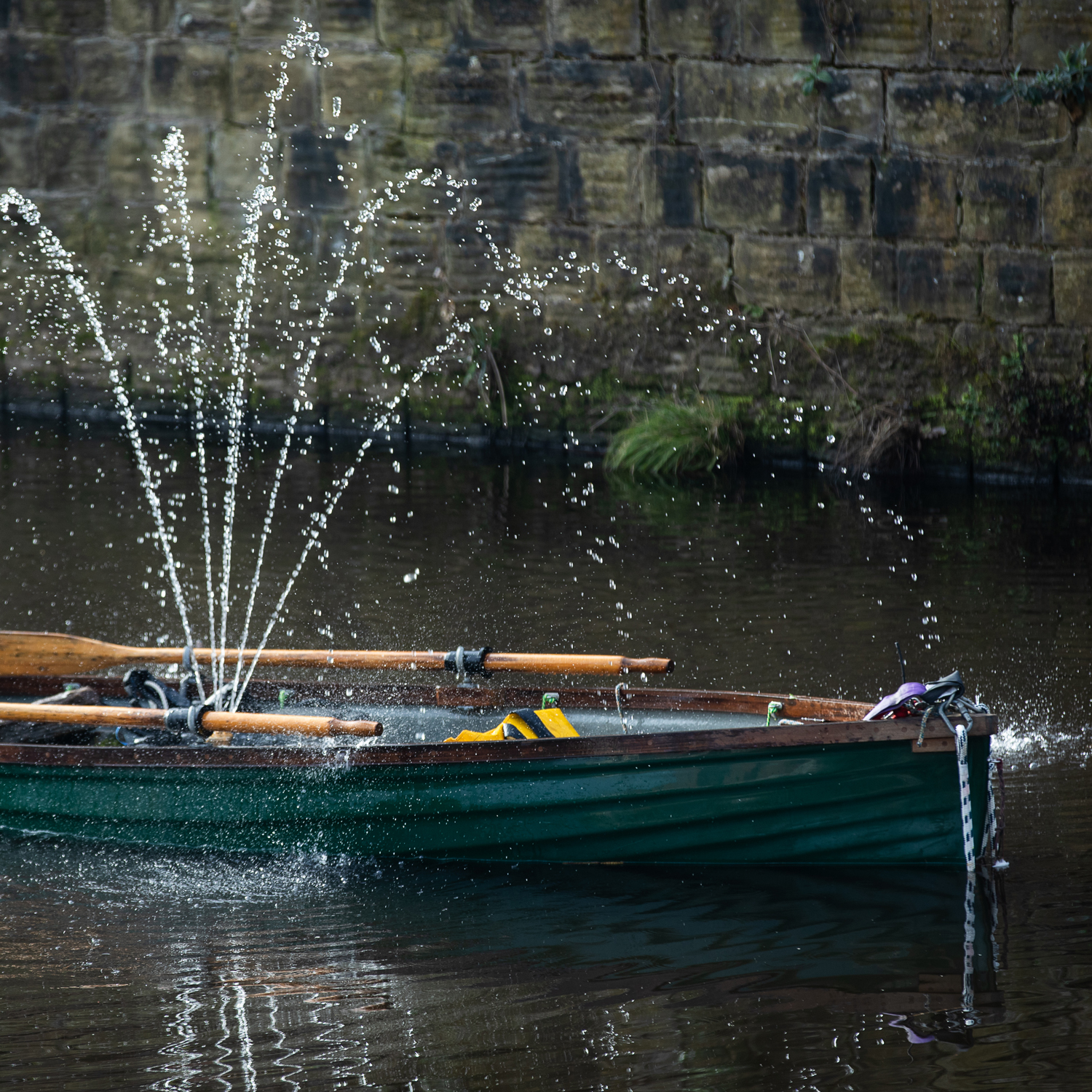
Bide, is a public art installation designed to replicate the slow melodrama of a boat in distress, yet continuously retrieved. It was originally commissioned for presentation in Yorkshire's River Don and connected waterways. It was a key pilot artwork, creating a precedent for the central role of cultural interventions in sparking interest and debate on a compelling contemporary issue.
The installation was part of a wider initiative called The River Don Project, which sought to reconsider our relationship to our environment through a series of art projects, citizen science, and public engagement activities. The project was framed around the question of whether a river can achieve legal ‘personhood’ and whether granting rights to natural entities could reframe our understanding of our responsibilities to our context.
Bide was designed to draw attention to a precarious balance of elements. Based on the traditional Yorkshire Coble, the artwork presents a boat as a delicate indicator of abstracted vulnerability. Responding to fluctuating river levels, the small boat continuously struggles to maintain an equilibrium. Water flows into the boat as the river rises, while simultaneously attempting to bail out its flooding hull. The boat is a small indicator of the precarious balance of forces needed to pursue symbiosis and retreat from catastrophe.
Within the bucolic vignette, the installation reflects the complexity of forces beneath the river's surface. To maintain the simple ancient principle of displacement. the compromised vessel contains an array of sensors. In addition to responding to its shifting buoyancy in real time, it calculates the power generated by its progress against the current while monitoring the depletion of its energy as it struggles for survival.
The self-defeating system is playful by design, but it also invites questions about the challenges of aspiring to more harmonious cohabitation with our natural environment.
--
In its first iteration, the boat was secured with weighted lines against the flow of water toward a historic weir in Sheffield. It was designed to be flexible in its installation, with a variety of non-invasive methods for locating the boat being developed. The boat is retrofitted with a 12v directly activated solenoid that allows water to ingress through a skin fitting in the hull. The solenoid was controlled remotely through a programmable power supply and wireless network connection. The flow rate was determined by a live data connection, enabling it to respond to water, pollution, precipitation, or other levels. The level of the boat’s draught was regulated by internal water level sensor data from the internal depth sender, and from the fluctuations of the remote data feed. The boat was designed to ‘bail’ itself out through the installation of float switches, a submersible bilge pump, and a fountain nozzle. The entire system is powered by a sealed marine battery, trickle-charged via a choice of solar panel, miniature wind, or underwater tidal turbine, depending on location. The system was designed to maintain its fragile equilibrium and be regulated remotely via the live data connection. Live data is available to view online and is designed to be displayed on touch screens or projections near the installation.
Materials:Donor vessel, mobile data Interface, 12v direct actuated solenoid, Victron programmable charge unit, submersible bilge pump.
Tony Grisoni for the kind loan of the beautiful vessel, 'Toona' for the installation. Amy Carter Gordon for the project management and curation of the accompanying Faethm exhibition.
Exhibitions:
FaethmTalks:
Modelling the Future Rights of Nature in South YorkshireSponsors:
